
Called to Continue
ExDM 404 Group Project
Description
In one of my experience design courses, my team and I were asked to identify a real need and create an experience that could meaningfully address it. We chose to focus on adults in The Church of Jesus Christ of Latter-day Saints who returned home early from their volunteer missions—an experience that can carry emotional weight, cultural misunderstanding, and a deep sense of isolation.
We knew this was a sensitive and complex issue, so we created a judgment-free, collaborative environment where our team could ideate openly and explore different possibilities. Using the design process, we gathered empathy data, defined the problem, brainstormed ideas, and built a prototype to test. When our first prototype missed the true need, we returned to our research, refined our thinking, and iterated until we developed a solution that resonated deeply with those we aimed to serve.
Problem
Early-returned missionaries often face a unique and deeply personal challenge. In the culture of The Church of Jesus Christ of Latter-day Saints, returning home earlier than expected is uncommon and can carry emotional weight, social misunderstanding, and feelings of judgment or failure. Many individuals in this situation struggle to find community, feel supported, or know how to navigate the transition home.
The problem was complex:
The emotional needs were sensitive and varied.
The cultural stigma created barriers to honest conversation.
There were no widely accessible resources or experiences designed specifically for this group.
And because each person’s experience is different, there was no obvious or universal solution.
Our task was to identify the real, underlying need—not just the surface problem—and design an experience that could help early-returned missionaries feel supported, understood, and valued. We set out to create something that offered community, reframing, and a sense of belonging for individuals who often feel alone in their experience.
Solutions
Gathering Empathy Data
Conducted interviews and conversations to understand the emotional, cultural, and social challenges early-returned missionaries face.
Defining the Core Need
Synthesized empathy findings to determine the real problem: the need for connection, not just information or awareness.
Clarified the gap between what early-returned missionaries were experiencing and the support currently available to them.
Judgment-Free Ideation
Created a safe, vulnerable, and open environment where all ideas were welcomed without criticism.
Worked collaboratively to brainstorm possible solutions ranging from awareness nights to supportive gatherings to more immersive formats.
Building & Testing Prototypes
Designed an initial prototype to explore what a support-focused experience could look like.
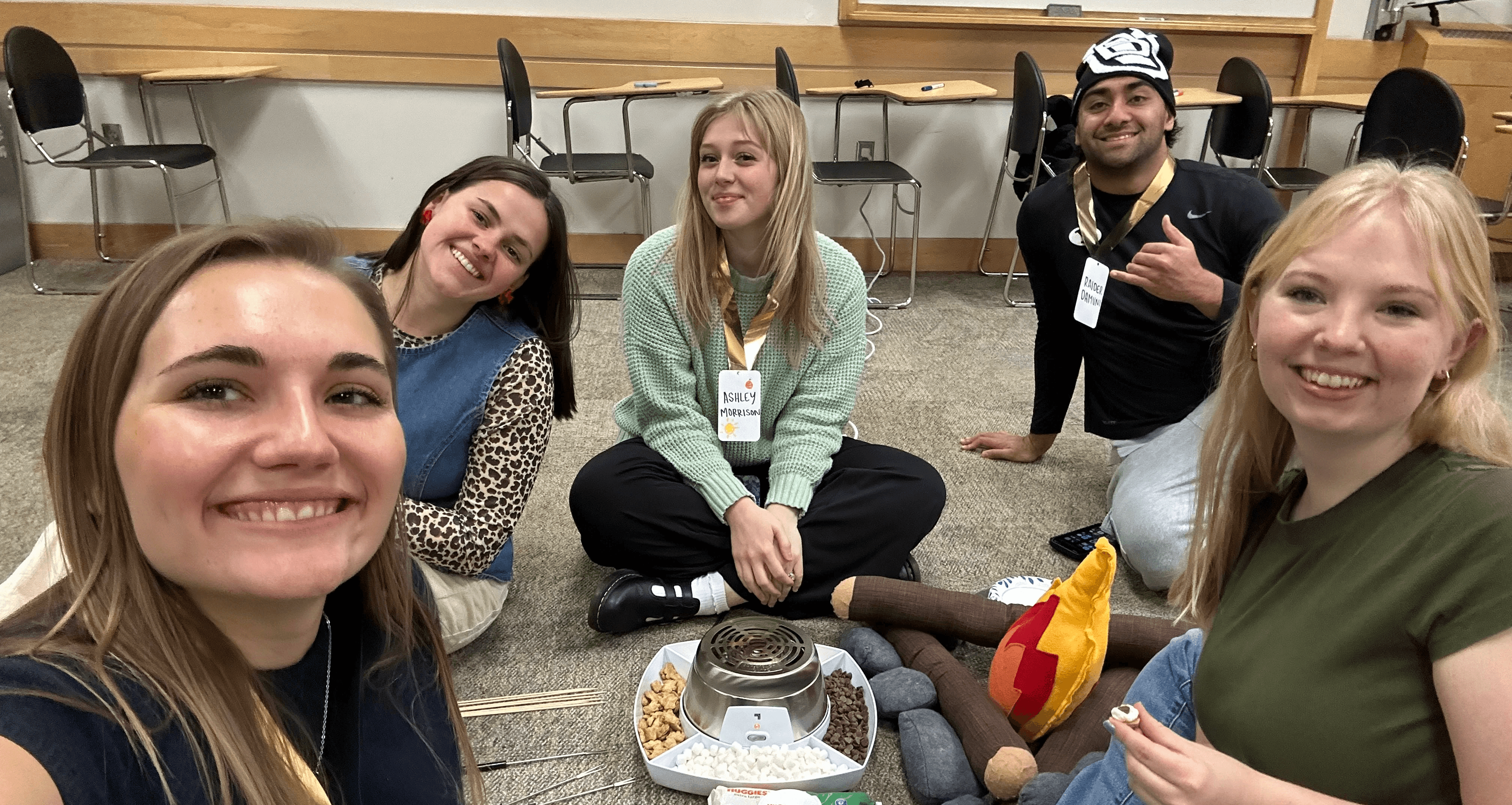
Ran a live test to observe participant response and identify gaps in our ideas.
Quickly realized our first prototype solved an adjacent problem, not the true one — prompting us to pivot.
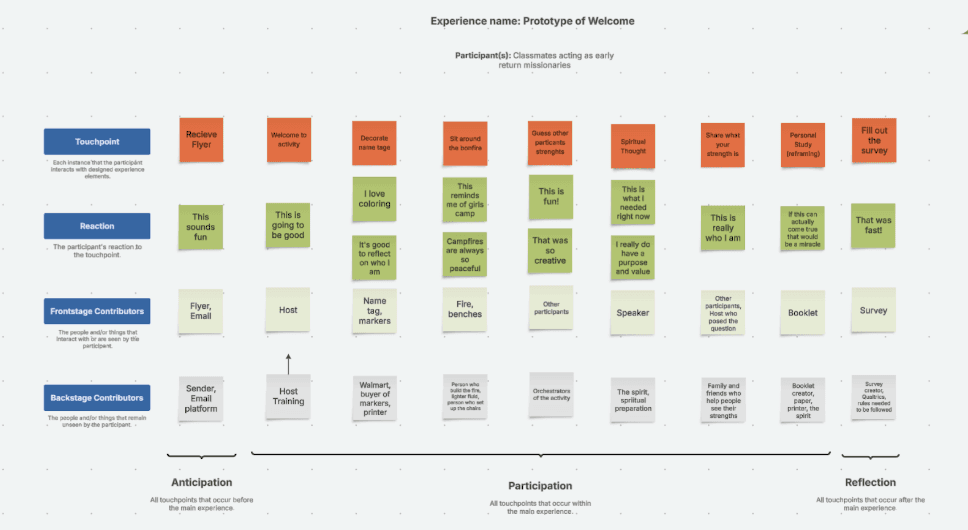
Created an experience map, storyboards, brand elements, and a detailed proposal to communicate the vision clearly.
Documenting the Final Solution
Compiled all insights, touchpoints, and design decisions into a comprehensive proposal.
Ensured the final deliverable captured the emotional depth, purpose, and structure of the experience.
Designed the retreat to be both emotionally supportive and experientially cohesive.
Download Project File
Impact
Improved ability to identify real user needs, distinguishing deeper emotional challenges from surface-level symptoms
Stronger empathy-based design skills, especially in conducting sensitive empathy interviews and synthesizing data through affinity mapping
Greater confidence in iterative prototyping, including learning to pivot when early solutions miss the mark
A clearer understanding of experience mapping, touchpoint sequencing, and how structure shapes emotional outcomes
Stronger communication skills, especially in articulating design decisions
Overall, this project taught me how to listen deeply, design intentionally, and create experiences that support people through moments that truly matter.
Tools
Design & Research Tools
Empathy interviews to understand emotional and cultural challenges
Experience mapping to visualize the user journey and touchpoints
Prototyping methods for testing early concepts and gathering feedback
Collaboration Tools
Judgment-free group brainstorming to encourage creativity and vulnerability
Open communication to support trust and shared ownership
Experience Design Frameworks
Design Thinking process (Empathize → Define → Ideate → Prototype → Test → Iterate)
Experience Brand Guide
Touch Point Templates
Journey Mapping
Storytelling
Lucid Chart and Lucid Spark